
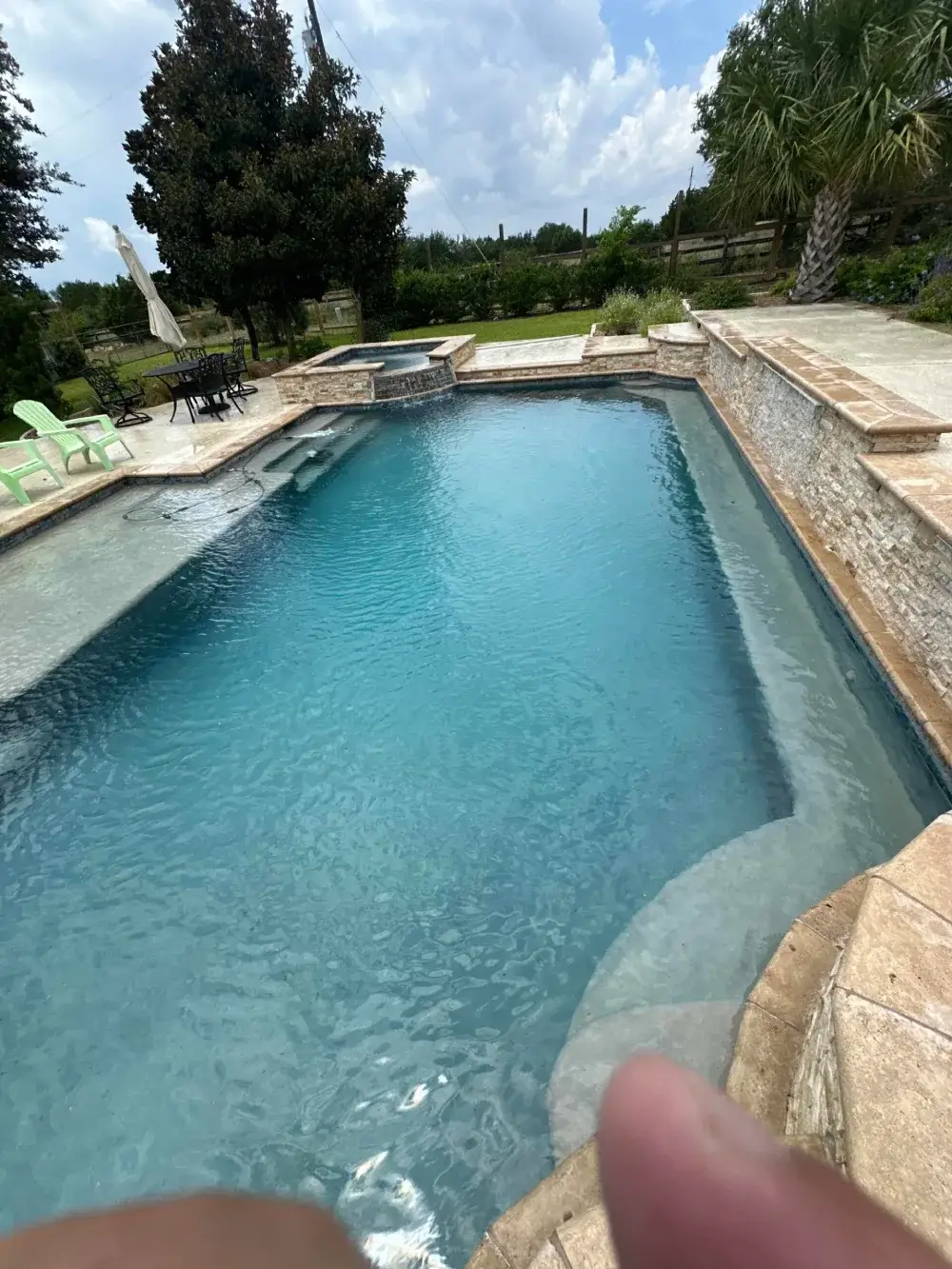
Pool service is all about keeping your pool clean, clear, and ready to enjoy. Regular service can include everything from weekly cleaning and water balancing to equipment repairs and resurfacing. Austin Pool Times provides this ongoing care for homes, hotels, apartment communities, and HOA properties throughout Austin, TX.
At Austin Pool Times, we are a licensed and insured pool service company serving Austin, West Lake Hills, Cedar Park, Bee Cave, Lakeway, Leander, and Dripping Springs. Our team can take care of cleaning, water chemistry, equipment, repairs, and renovations, so if we spot a problem during a regular visit, you already have the right people there to take care of it.
The Work That Falls Under Pool Service
Pool service is five kinds of work sharing one schedule, and most Austin properties need some mix of all five across a year.
1. Cleaning and chemistry. Skimming, brushing, vacuuming, basket clearing, testing, and chemical adjustment at fixed intervals, usually run as weekly pool maintenance.
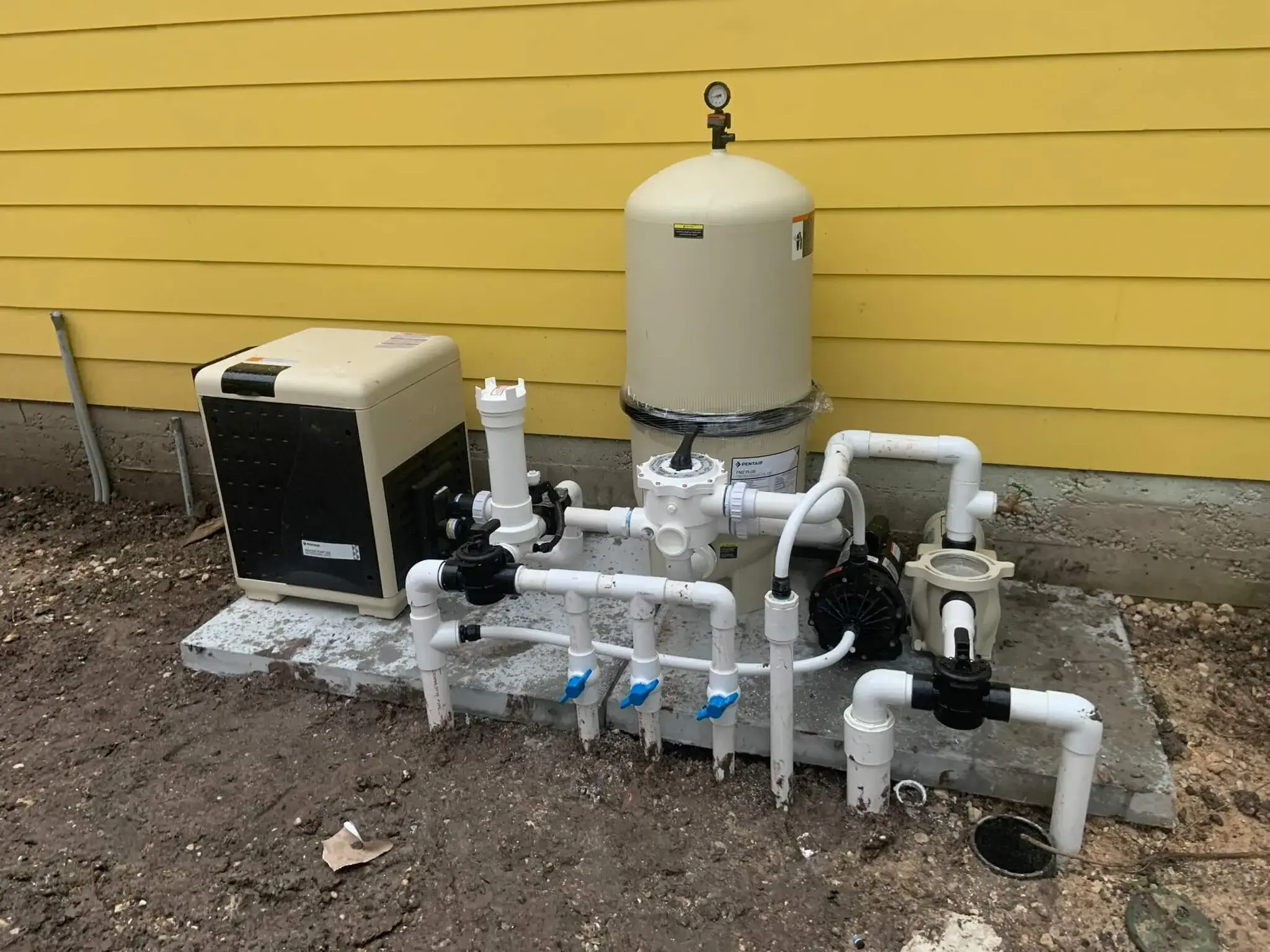
2. Equipment service. Pumps, filters, heaters, salt cells, automation, valves, timers, and lighting, diagnosed and repaired or replaced through our pool repair services.
3. Water correction. Free chlorine, pH, total alkalinity, cyanuric acid, and calcium hardness, measured with a reagent kit rather than a strip.
4. Inspection. A documented look at circulation, surfaces, deck, and pad plumbing, usually before a purchase or a renovation quote.
5. Renovation. Resurfacing, tile and coping work, and pad rebuilds, handled through our pool renovation and restoration work.
Signs a Pool Needs Service Beyond a Skim
Cloudy water that clears for a day and comes back is a circulation or chemistry failure, not a dirt problem, and it is the most common reason an Austin owner calls us first. Other triggers:
- A filter pressure gauge sitting 8 to 10 psi above its clean starting pressure
- A pump that runs loud, loses prime, or cycles off on thermal overload
- Water that holds chlorine one day and reads zero the next morning
- Scale rings at the tile line, or grit on the plaster underfoot
- Staining that returns within a week of a shock treatment
How We Work a Pool, Visit by Visit
Every Austin Pool Times visit runs in the same order.
1. Walk the perimeter and the pad first. Water level, deck condition, visible leaks, and filter pressure get checked before anyone touches the water. Pad problems change what the rest of the visit is for.
2. Clear the physical load. Skim, empty the skimmer and pump baskets, brush walls, steps, and waterline tile, then vacuum where the load calls for it.
3. Test with reagents, not strips. Free chlorine, combined chlorine, pH, total alkalinity, cyanuric acid, and calcium hardness, measured with a DPD reagent test.
4. Correct in sequence. Total alkalinity first, because it buffers pH. Then pH, sanitizer, stabilizer, and hardness. Correcting pH before alkalinity is why some pools drift back within days.
5. Inspect the equipment under load. With the pump running, we check flow, filter pressure against its clean baseline, valve position, salt cell output, and heater operation.
6. Document and report. Readings, chemicals added, work performed, and any recommendations go into a written report emailed to the owner or property manager.
Residential Pools and Public Pools Follow Different Rules in Texas
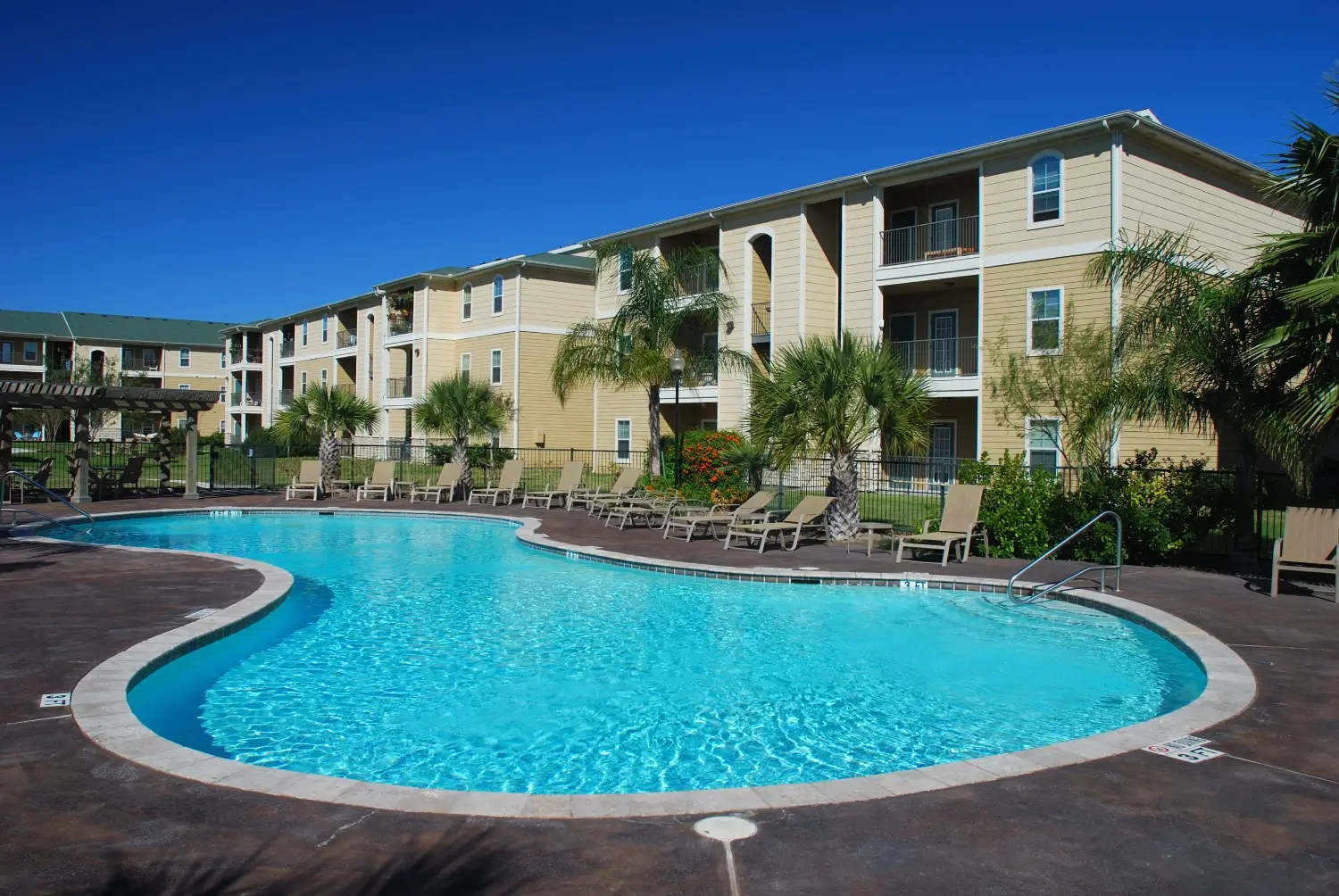
A pool at an apartment community, hotel, or HOA amenity center is a public pool under Texas law, and it carries chemical and record-keeping duties a backyard pool does not. The Texas Department of State Health Services sets those limits in 25 Texas Administrative Code Chapter 265, Subchapter L, effective April 26, 2024.
Under Figure 25 TAC Section 265.193(c), a public pool open for use must hold free available chlorine at a minimum of 1.0 ppm, pH no lower than 7.0 and no higher than 7.8, combined chlorine no higher than 0.4 ppm, cyanuric acid no higher than 100 ppm, and calcium hardness at a minimum of 150 ppm. Class B pools, the category most apartment and hotel pools fall into, also carry testing and log duties the operator has to be able to produce on request.
A property manager who hires a crew with no compliance knowledge inherits the citation, not the crew. We run the two as separate programs on purpose: commercial pool service and residential pool service.
What Changes the Scope of a Pool Service Job
Pool service is quoted per property. These are the variables that move the number.
1. Water volume and surface area. A 25,000-gallon pool needs more sanitizer and more brushing time than a 12,000-gallon one.
2. Sanitation type. Salt chlorine generators, traditional chlorine, and mineral systems carry different chemical costs and failure profiles.
3. Tree cover. Live oak and pecan canopy changes debris volume by season and can double vacuum time during spring pollen and fall leaf drop.
4. Surface type and age. Plaster, pebble, quartz, and vinyl hold stains and scale differently, and older plaster needs closer hardness control.
5. Bather load. A backyard pool used by one family and an apartment pool serving 80 units are not the same chemical problem.
6. Equipment condition. A pump near the end of life raises the labor on every visit until it is addressed.
We quote after an on-site assessment, because a pool’s real condition shows in the pad and the waterline, not in a phone description.
What Austin Pool Times Holds Itself To
One Assigned Technician
The same technician runs your property on the same day each week. Familiarity with a specific pool turns a small pressure change into an early catch rather than a summer shutdown.
Cleaning and Repair Under One Roof
Our technicians diagnose and repair equipment instead of referring it out, so a pump fault found on a routine visit gets a diagnosis the same day.
Written Records After Every Visit
Every visit produces a report with chemical readings, work performed, and photographs, which a property manager can hand to an inspector or an owner.
Licensed and Insured
Austin Pool Times is licensed and insured, and our technicians carry safety training for chemical handling and equipment work.
Put Your Pool on a Service Schedule
Austin Pool Times covers cleaning, chemistry, repair, and renovation across Austin and the surrounding communities, with one assigned technician and a written report after every visit. Book an on-site assessment and we will quote the scope your property needs.
Pool Service Questions Austin Owners Ask
What does pool service include in Austin, TX?
Pool service in Austin, TX includes skimming, brushing, vacuuming, basket clearing, water testing, chemical balancing, and an equipment check on each visit. Larger scopes add filter cleaning, equipment repair, inspection, and renovation. Austin Pool Times covers all of these under one agreement rather than splitting them across vendors.
How often should a pool be serviced in Central Texas?
Most Austin pools need service weekly through the swim season and every one to two weeks in the cooler months, because water temperature drives both sanitizer demand and algae growth. Pools under heavy tree cover often stay weekly year-round on debris load alone. Public pools at apartments and hotels need more frequent attention to meet state testing rules.
Do you service commercial and public pools?
Yes. Austin Pool Times services hotel, apartment, HOA, gym, and community pools, which Texas classifies as public pools under 25 Texas Administrative Code Chapter 265, Subchapter L. That work carries chemical limits and record-keeping duties beyond residential care. Commercial accounts receive documented readings on every visit.
Can you repair pool equipment, or only clean the pool?
Austin Pool Times repairs and installs pool equipment in addition to cleaning. Our technicians work on pumps, filters, heaters, salt chlorine generators, automation, valves, timers, and lighting. Diagnosis happens on-site, and the owner gets both the repair option and the replacement option before work starts.
How do you handle a green pool?
A green pool is treated as a circulation and chemistry failure rather than an algae problem, so the first step is testing the water and inspecting the filter and pump before any chemical goes in. Treatment then means correcting alkalinity and pH, holding a sustained sanitizer level, brushing every surface, and filtering continuously. Most recoveries take several days of repeat visits.

CALL US FOR A FREE,
NO-OBLIGATION ESTIMATE

Why Choose Us
Why Austin Pool Times is Different
Austin-Owned, Austin-Invested: This isn’t just pool service, it’s personal. When Austin Pool Times shows up, you’re getting neighbors who live down the road, raise their families here, and care what your pool looks like on a Saturday afternoon. We treat every backyard like it’s part of our community because it is.
Trusted Local
Technicians
Reliable Service, Every Time
Clear, Comprehensive Communication
Commitment to Excellence

Our Happy Customers
Discover Why Our Customers Dive Into Our Services


Ready to Dive In?
Give us a call or drop us a message. We’ll get you set up with the right service, right away.